
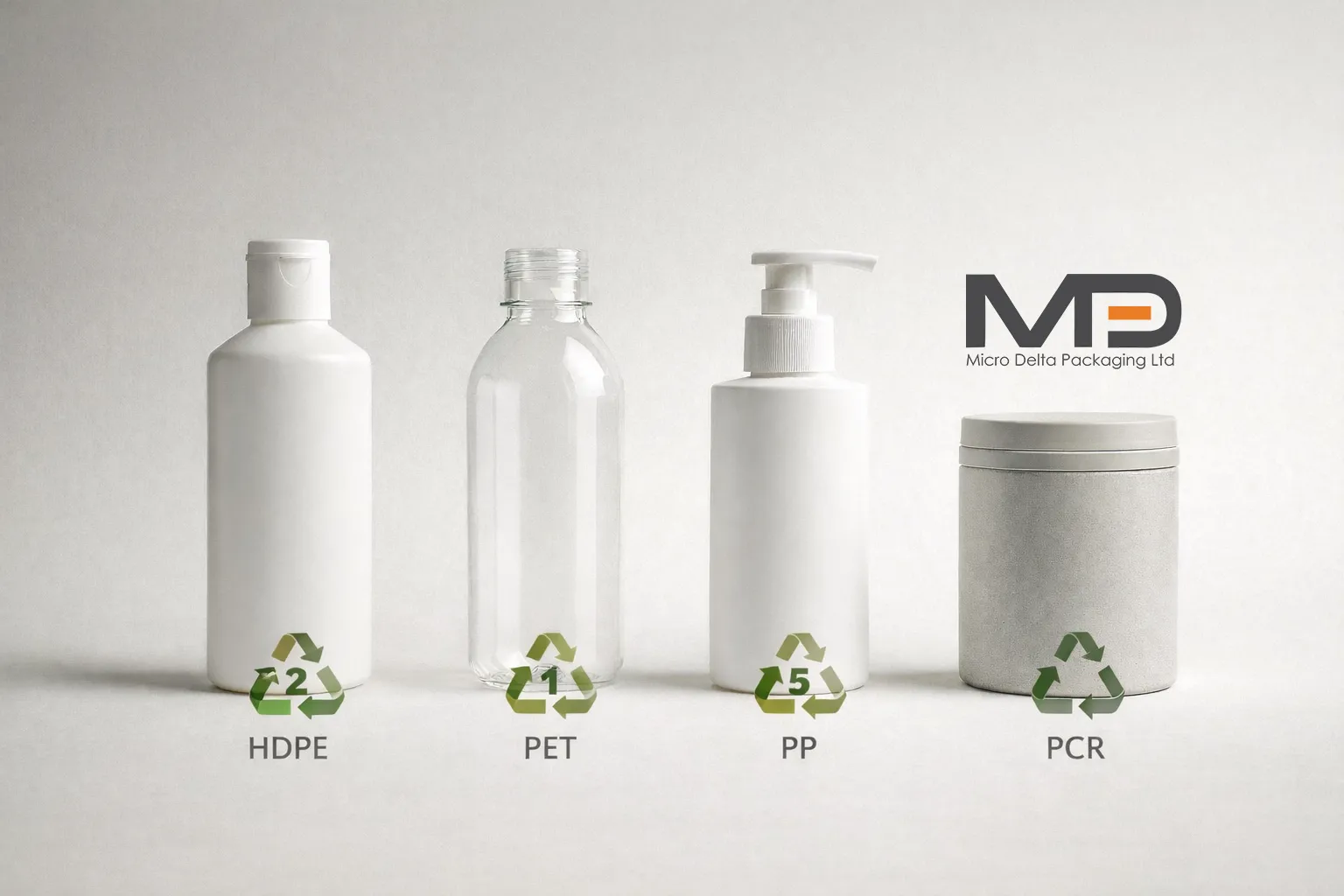
Introduction
Plastics remain one of the most widely used materials in the packaging industry due to their versatility, durability and cost efficiency. Different plastic types offer distinct properties, making them suitable for specific applications, products and supply requirements. Understanding these materials helps support informed packaging decisions and long-term product performance.
Below is an overview of the most common plastics used in packaging, including their characteristics, typical uses and key considerations.
HDPE – High Density Polyethylene
High Density Polyethylene (HDPE) is a thermoplastic polymer derived from petroleum and widely used across the packaging industry. It is valued for its strength, rigidity and excellent chemical resistance.
HDPE bottles and containers are commonly used for household products, personal care items and industrial formulations. The material performs well in environments where durability and product protection are essential, while remaining lightweight and cost-effective.
Key characteristics:
- High chemical resistance
- Strong and impact resistant
- Widely recyclable
PET – Polyethylene Terephthalate
Polyethylene Terephthalate (PET) is a strong, lightweight plastic resin commonly used for packaging products that benefit from clarity and visual presentation.
PET has a clear, glass-like appearance and is often described as a safe plastic that does not shatter. It is widely used for cosmetic, food and beverage packaging where product visibility and structural integrity are important.
Key characteristics:
- Clear and transparent finish
- Good barrier properties
- Highly recyclable
PP – Polypropylene
Polypropylene (PP) is a thermoplastic polymer known for its strength, flexibility and resistance to heat. It is commonly used for caps, closures and dispensing components such as pumps and nozzles.
PP is lightweight yet robust, making it suitable for applications requiring repeated use or mechanical movement, while maintaining consistent performance over time.
Key characteristics:
- Lightweight and durable
- Heat resistant
- Suitable for closures and dispensing components
PCR – Post Consumer Recycled Plastic
Post Consumer Recycled (PCR) plastic is produced from previously used plastic materials that have been collected, processed and reintroduced into the manufacturing cycle.
PCR is increasingly used as part of sustainability-focused packaging strategies. Commonly, a percentage of PCR material is blended with virgin plastic to balance appearance, durability and performance. In many applications, one hundred percent PCR options are also available, depending on product requirements and aesthetic expectations.
Key characteristics:
- Supports circular economy goals
- Available in blended or full PCR options
- Helps reduce reliance on virgin plastics
Recycling symbols and plastic identification codes
In addition to the material itself, plastic packaging is marked with a recycling symbol and a number inside the triangle, known as the Resin Identification Code. This number helps identify the type of plastic used and supports correct sorting and recycling.
- HDPE (code 2) is widely recognised for its chemical resistance and recyclability. It is commonly used for bottles and containers and is accepted by most recycling systems.
- PET (code 1) is clear, lightweight and widely recycled. It is often used for transparent bottles and packaging where product visibility is important.
- PP (code 5) is valued for its strength and heat resistance. It is frequently used for caps, closures and dispensing components and is increasingly recyclable in the UK.
- PCR plastics may carry the same identification codes as their virgin counterparts, but indicate that the material contains post-consumer recycled content. The percentage of PCR can vary, including options up to one hundred percent, depending on application and performance requirements.
Understanding these symbols helps businesses make informed packaging choices, supports sustainability goals and ensures packaging aligns with local recycling guidance.
Choosing the right plastic
Selecting the appropriate plastic depends on several factors, including product formulation, dispensing requirements, visual expectations and sustainability objectives. Material compatibility, performance over time and supply continuity all play an important role in ensuring packaging solutions remain practical and reliable.
Packaging decisions benefit from a clear understanding of how each plastic behaves in real-world applications, rather than focusing solely on material type alone.